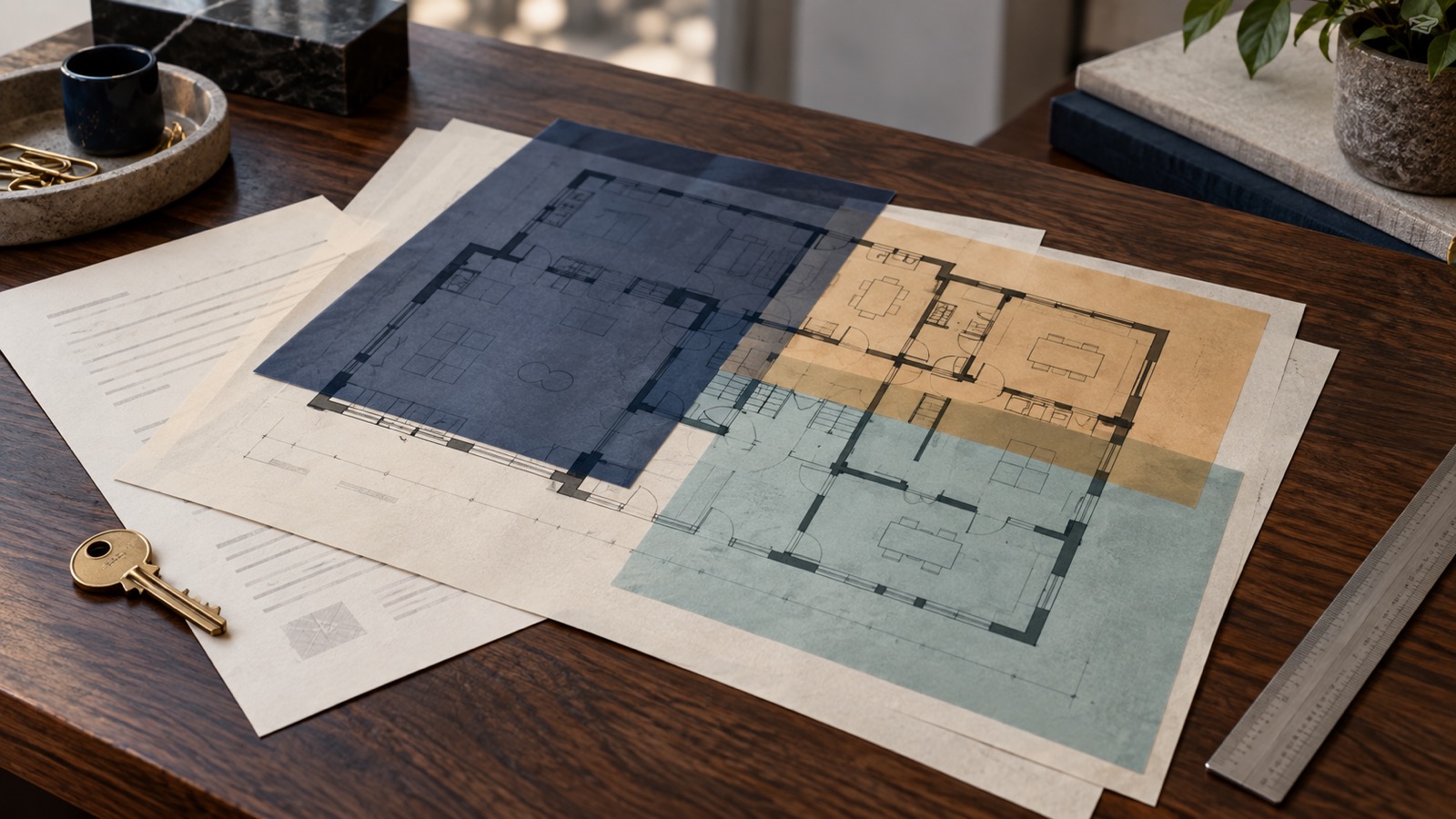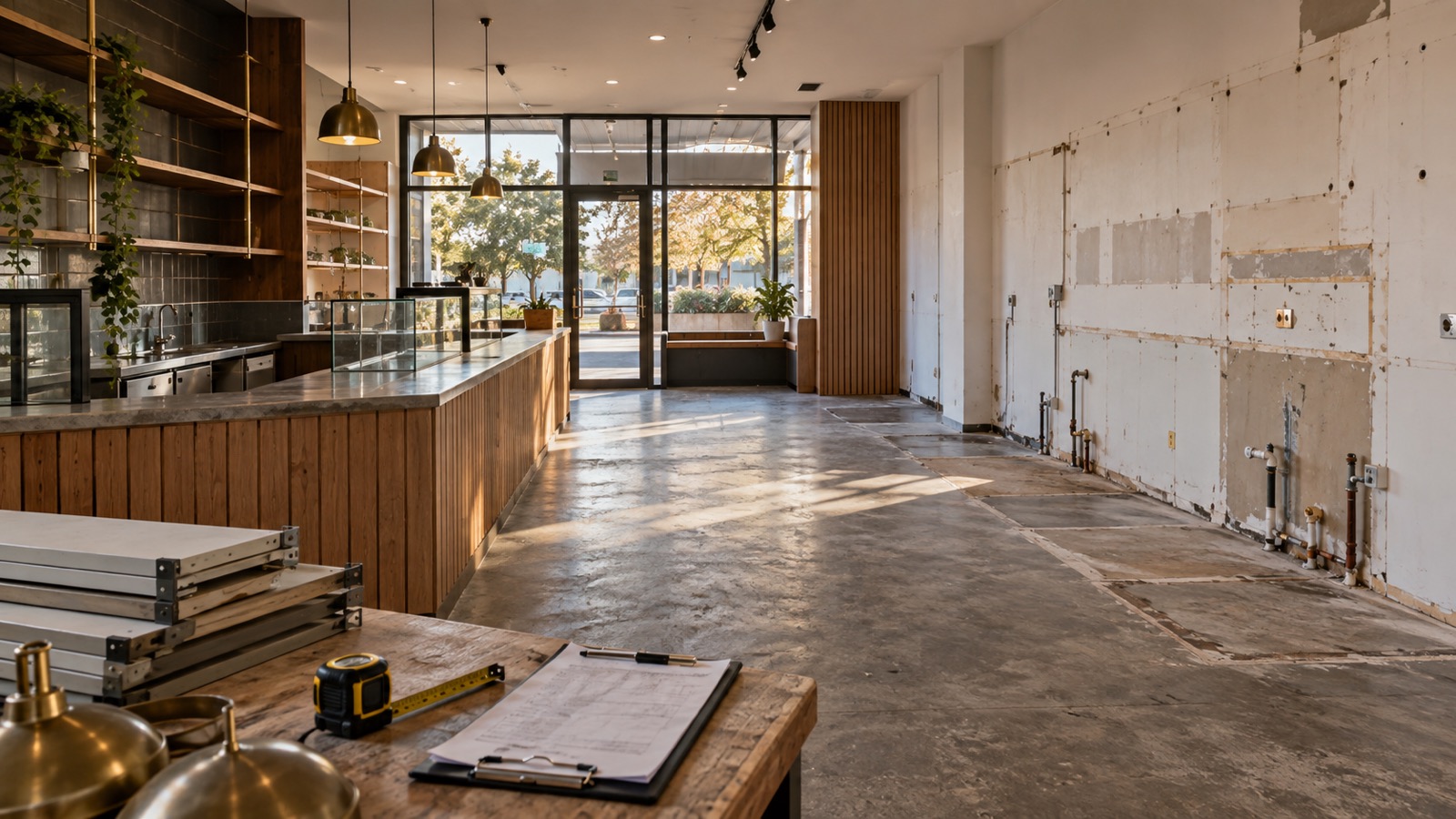
An inherited fit-out is not automatically an acquisition asset. Before attributing value to counters, partitions, services, finishes or installed equipment, establish who owns each item, whether it is approved and serviceable, how long it will remain useful, and what the lease requires at the end of the term.
The buyer may otherwise pay for a seller’s sunk expenditure and still fund repairs, alterations and eventual removal. The practical task is to price the fit-out’s future utility net of those obligations—not to accept its original cost or accounting value as proof of value.
Separate four different questions
Treat the fit-out as four linked but distinct workstreams:
- Title and right to use: Is the item owned by the seller, supplied by the landlord, leased from a financier or subject to a supplier arrangement? Is it included in the sale?
- Condition and performance: Does it work safely and reliably, and what repairs or replacement are approaching?
- Approval and adaptability: Was it approved by the landlord and relevant authorities, and can it support the buyer’s intended operation without material rework?
- Exit obligation: Must it remain, be repaired, be removed or be reinstated when the lease ends?
Installation does not answer ownership. The Australian Government’s PPSR guidance says the register can reveal security interests over personal property, but it is not an ownership register and generally does not cover land or fixtures (PPSR). A buyer therefore needs documentary title evidence as well as appropriately scoped PPSR searches and legal advice.
Build an item-by-item evidence file
Request enough material to reconcile the physical premises with both the sale contract and the lease:
- an asset register identifying each material fit-out item, serial number, location, owner and proposed treatment at settlement;
- purchase invoices, landlord contribution records, hire or finance agreements, supplier-loan documents and any PPSR release evidence;
- the lease, variations, disclosure statement, incentive deed, fit-out guide and every landlord approval or licence for existing works;
- approved plans, occupation or completion records where applicable, council or authority correspondence and fire, electrical, plumbing or accessibility documents;
- entry condition reports, dated photographs, defect notices and landlord correspondence about damage or unauthorised works;
- warranties, service histories and maintenance records for installed plant; and
- current quotations for priority repairs, adaptation, removal and reinstatement.
The Victorian Small Business Commission’s 2026 tenant brochure identifies landlord-provided structures, fixtures, plant and equipment, as well as works, fit-out, refurbishment and alterations, as matters covered by lease disclosure. It also prompts tenants to complete an inspection report and take photographs before possession (VSBC). In an acquisition, obtain the original baseline if it exists and create a new, dated handover record.
Value utility, not the seller’s spend
The seller’s fit-out invoices and depreciation schedule are useful evidence of history and tax or accounting treatment. They do not establish what the fit-out is worth to this buyer.
Classify each material item as:
- retain: suitable, documented and expected to remain useful through the buyer’s planning period;
- repair: usable after quantified work, with downtime included;
- adapt: commercially useful but requiring landlord or authority approval and a costed modification;
- replace: near the end of its reliable life or unsuitable for the buyer’s model; or
- remove: no future utility, but carrying disconnection, disposal, repair or make-good cost.
For each category, estimate the cash cost, approval lead time, closure or trading disruption, and residual end-of-term obligation. A fit-out that cost the seller $300,000 several years ago may be worth little to a buyer who must spend heavily to reconfigure it and later strip it out. That is a commercial conclusion, not a valuation or tax rule.
Verify approvals before relying on the fit-out
Landlord consent and government approval answer different questions. Ask the landlord to confirm in writing which works were approved, which may stay after assignment and whether any breach or rectification notice remains open. Separately, verify the relevant planning, building, fire, health, accessibility and trade-specific requirements with qualified advisers and the responsible authority.
Australian Government guidance directs businesses to check zoning and permits with the local council, including approvals required before a fit-out (business.gov.au). Existing operation is not conclusive evidence that every alteration is approved or that the buyer’s intended changes are permitted.
Inspect and price the physical exposure
Walk the premises with the asset register, lease plan, original condition report and approved drawings. Photograph discrepancies and test material building services and installed plant with suitable specialists. The inspection scope should distinguish ordinary wear, latent defects, deferred maintenance, tenant damage and alterations that the landlord may require to be removed.
Obtain written cost evidence for material items. A builder, building consultant, services engineer, equipment technician or quantity surveyor may be needed depending on the premises. Ask quotations to state assumptions about access, demolition, hazardous materials, disposal, after-hours work, authority fees and lost trading time rather than accepting a single unexplained allowance.
Trace make-good back to the baseline
Make-good wording can require anything from limited repairs and repainting to removal of the fit-out and a return to base-building condition. NSW official guidance says the obligation is determined by the lease, recommends documenting the starting condition and notes that an assignee may need a new inspection report (NSW Small Business Commissioner).
Ask the buyer’s lawyer to map:
- the condition to which the premises must be returned and the evidence that defines it;
- whether the buyer would assume obligations arising from seller-installed or earlier fit-out;
- which items the landlord requires to remain or be removed;
- repair, redecoration, services-capping and reinstatement standards;
- timing, access and rent exposure while work is completed; and
- any agreed cash settlement or independent cost-determination mechanism.
Do not rely on an informal comment that the landlord will “probably keep” useful items. Obtain an appropriate deed, consent or lease variation if the commercial decision depends on a waiver or changed baseline.
Convert findings into settlement protections
The sale and lease documents should allocate identified fit-out risk, not leave it as a post-settlement argument. With legal advice, consider:
- a settlement schedule of included, excluded, landlord-owned and third-party items;
- evidence of releases or payouts for relevant security interests and equipment finance;
- conditions for specified landlord and authority approvals;
- seller rectification of agreed defects or unauthorised work before settlement;
- a price adjustment, retention or other documented mechanism for unresolved cost, where appropriate; and
- a signed handover condition record acknowledged by the relevant parties.
Hypothetical example: a buyer plans to retain a service counter valued by the seller at its original construction cost. Inspection shows that electrical work behind it lacks supporting approval records, refrigeration is near replacement and the lease requires all tenant works to be removed. The buyer should assess the counter together with rectification, replacement, downtime and eventual removal—not as a standalone asset at historical cost.
When specialist advice is needed
A commercial leasing lawyer should review ownership questions, lease assignment, approvals, make-good wording and settlement protections. An accountant and tax adviser can examine asset allocation, depreciation and transaction treatment without treating book value as commercial value. Use appropriately qualified building, services, planning, fire, access, environmental or equipment specialists where physical condition or compliance is material.
Related reading
- Premises and lease considerations
- Taking Over the Seller’s Lease: Acquisition Questions to Resolve
- A Lease Due Diligence Checklist for Business Buyers
- How Premises Suitability Can Affect a Business Acquisition
Sources
- ‘Make good’ and retail leases — NSW Small Business Commissioner, reviewed 2026-09-27
- Retail Leases Information Brochure for Tenants — Victorian Small Business Commission, reviewed 2026-09-27
- Choose your business location — business.gov.au, reviewed 2026-09-27
- Protecting your business assets — Personal Property Securities Register, reviewed 2026-09-27
Disclaimer
This article provides general information only. It does not constitute legal, tax, accounting, financial, credit, valuation or other professional advice. Circumstances differ. Obtain advice from appropriately qualified advisers before acting or entering a transaction.