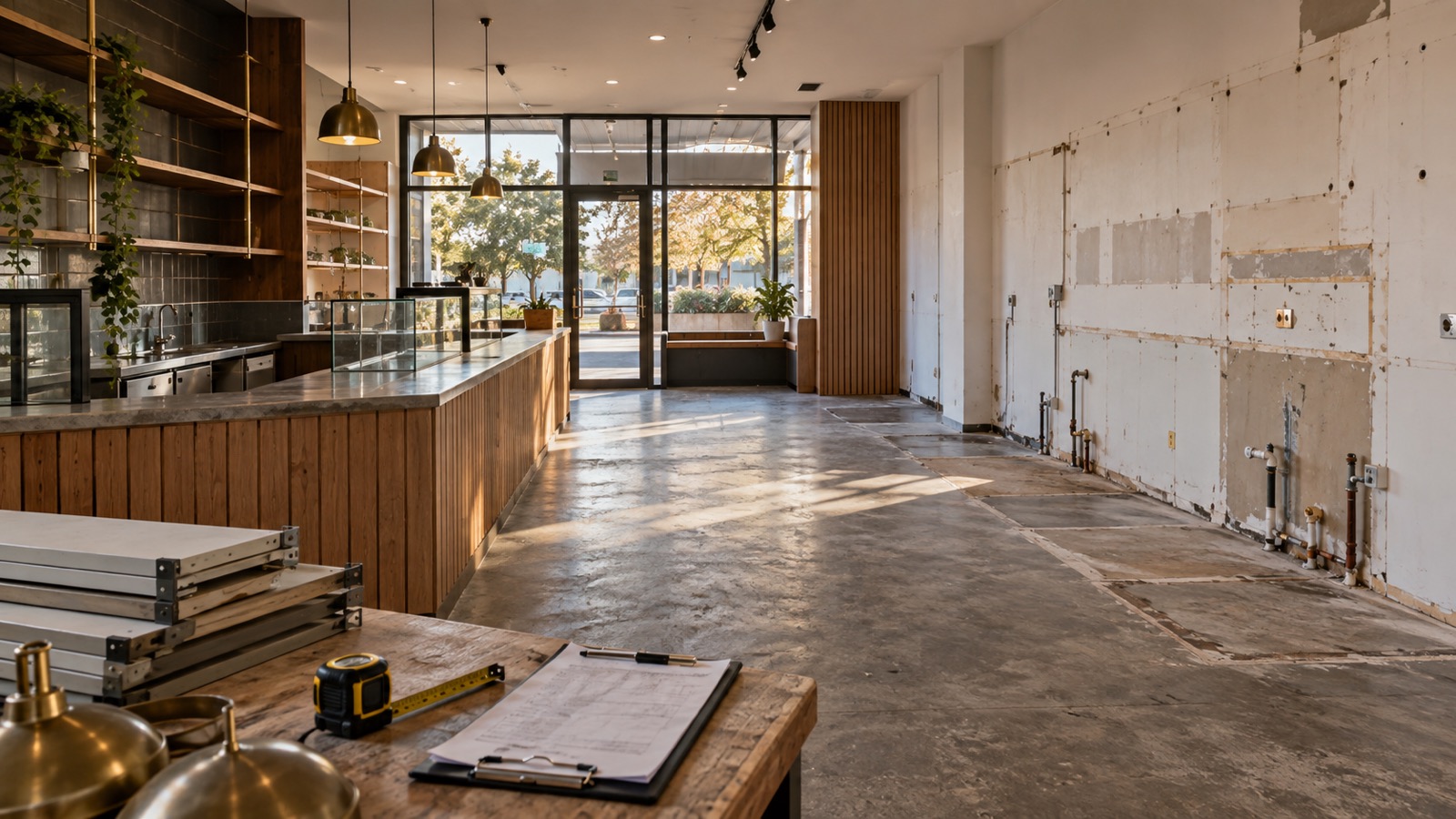
Keeping the seller’s established trading location usually offers the stronger continuity case: customers know where to go, employees and suppliers know how the site works, and the fit-out may allow trading to continue near settlement. Moving can produce a better long-term site or lease, but it turns the acquisition into a business transfer and a premises-delivery project.
The right comparison is therefore not “old premises versus nicer premises”. It is the expected value of continuity at the existing site versus the fully costed, risk-adjusted path to opening elsewhere. A cheaper headline rent can be outweighed by fit-out, approval delays, duplicated occupancy costs and lost contribution during disruption.
What staying can preserve—and what it may lock in
An established site may carry location-specific value that is not easily separated from the business: habitual visits, local visibility, convenient staff travel, known delivery access and a layout already embedded in daily routines. Test that value rather than assuming it. Compare sales by channel and time, customer origin data where lawfully available, staff commuting patterns, supplier service records and trading results during past access disruptions.
Staying also means accepting a property position negotiated by someone else. Remaining term, options, rent reviews, permitted use, security, relocation or redevelopment rights, repair obligations and make-good exposure may not fit the buyer’s investment horizon. Assignment is not automatic. In NSW retail leasing, for example, official guidance requires a written request for landlord consent and specified disclosure and buyer information; other jurisdictions and commercial leases have their own rules (NSW Small Business Commissioner).
Treat landlord consent, acceptable assignment terms and any required cure of arrears or breaches as acquisition dependencies—not post-settlement administration.
What moving can improve—and what it must rebuild
New premises can solve genuine constraints: poor access, inadequate services, the wrong catchment, limited capacity, an unsuitable layout or lease terms that leave too little secure runway. They may also allow a fit-out designed for the buyer’s operating model rather than inherited around the seller’s history.
But a prospective site is not an operating location. Australian Government guidance recommends defining needs across customers, access, layout, cost, utilities, compliance and future growth, then checking zoning and required council approvals before fit-out (business.gov.au). Licences and permits can vary with the activity, state or territory and local government area (business.gov.au). Verify whether each approval attaches to the operator, activity or premises, and whether a new application or amendment is required.
Moving can also disturb people and relationships. Model which customers will travel, how discovery and signage will change, whether employees can work the new location and hours, and whether delivery routes, service windows or supplier charges change. Fair Work explains that a business sale can meet the statutory transfer-of-business tests and affect applicable workplace instruments and employee entitlements; obtain employment advice on the acquisition structure and proposed workforce changes (Fair Work Ombudsman).
Build two complete transition cases
Prepare an evidence-backed case for each path using the same forecast period. Do not compare the current rent with the new rent in isolation.
| Decision factor | Retain the established site | Move to new premises |
|---|---|---|
| Revenue continuity | Test how much demand depends on address, access and local habits | Estimate customer retention, ramp-up and temporary closure effects |
| People and suppliers | Confirm employee willingness and current service arrangements | Test commute, roster, recruitment, delivery and collection changes |
| Property rights | Verify assignment, remaining term, options, reviews and security | Negotiate the new lease, incentives, access dates and usable tenure |
| Capital and operating cost | Price repairs, inherited fit-out changes and make-good | Price design, approvals, fit-out, equipment moves and commissioning |
| Timing | Align consent and assignment with settlement | Sequence lease, approvals, works, utilities, licences, move and reopening |
| Downside | Model an unfavourable rent or tenure outcome | Model delay, cost overrun, customer loss and slower ramp-up |
Request monthly sales by site and channel, customer and order-location data in an appropriate aggregated form, footfall or appointment records, staff postcode or travel analysis, supplier and logistics records, and evidence of earlier closures or relocations. For each premises path, obtain the lease documents, written landlord position, fit-out scope and quotations, approval advice, utility lead times, insurance requirements and a programme with clear dependencies.
Include every overlap cost: rent and outgoings on two sites, deposits and guarantees, temporary storage, removals, duplicated utilities, professional fees, launch communications, staff downtime, stock handling and working capital during a slower opening period. Keep incentives separate from recurring occupancy economics.
Put dates before settlement, not after it
Map the critical path backwards from the first day the buyer must trade. A new site may require possession, design, landlord approval, authority approvals, building work, utility connection, equipment installation, testing, licences and staff familiarisation before opening. Record who controls each step, the earliest and latest credible date, evidence of completion and the financial consequence of delay.
Then connect the premises plan to the sale agreement. With legal advice, consider conditions for an effective assignment or executed new lease, necessary approvals, fit-out access, seller cooperation, customer communications and a workable long-stop date. Avoid completing merely because the asset sale is ready if the business has nowhere lawful and operationally ready to trade.
Use a decision rule, not a preference
Retaining the site is stronger when verified location-dependent contribution, continuity and speed outweigh the inherited lease and physical risks. Moving is stronger when the new premises materially improve the operating model and the buyer can carry the transition cost, delay risk and relationship disruption.
Pause if either case relies on an unapproved site, an unsigned lease, informal landlord assurances, unsupported customer-retention assumptions or a fit-out programme with no contingency. The decision should still work under a downside case—not only if every consent, trade and customer behaves as hoped.
When specialist advice is needed
A commercial leasing lawyer should compare assignment and new-lease terms and connect the chosen path to the acquisition documents. Planning, building, fire, access, environmental or industry specialists may be required for approvals and fit-out. An accountant should model duplicated costs, downtime, working capital and sustainable earnings. Employment advice may be needed for transferred employees, consultation and proposed location changes.
Related reading
- Premises and lease considerations
- Taking Over the Seller’s Lease: Acquisition Questions to Resolve
- When Lease Terms Complicate a Business Purchase
- A Lease Due Diligence Checklist for Business Buyers
- Inherited Fit-Out and Make-Good Risks When Buying a Business
- How Premises Suitability Can Affect a Business Acquisition
- Do Lease Incentives Distort the Earnings of a Business for Sale?
- Why Lease Classification Matters When Buying a Business
Sources
- Choose your business location — Australian Government, reviewed 27 September 2026
- Register licences and permits — Australian Government, reviewed 27 September 2026
- Transferring your lease — NSW Small Business Commissioner, reviewed 27 September 2026
- When businesses change owners — Fair Work Ombudsman, reviewed 27 September 2026
Disclaimer
This article provides general information only. It does not constitute legal, tax, accounting, financial, credit, valuation or other professional advice. Circumstances differ. Obtain advice from appropriately qualified advisers before acting or entering a transaction.